Do you have symptoms of testosterone deficiency?
Consult our team of urology and andrology experts for an accurate diagnosis of your condition.

In our unit in Andrología Valencia, we offer a specialized medical approach to the diagnosis and treatment of male hypogonadism (low testosterone) and its consequences, such as reduced sexual desire, fatigue, or changes in body composition. Our goal is to identify the cause of the problem and apply a personalized treatment based on medical evidence.
Our team is composed of medical professionals specialized in andrology, sexual dysfunction, and male hormonal disorders, with extensive clinical and surgical experience.

Dr. Ángel García Cortés is the Medical Director of Andrología Valencia and a specialist in erectile dysfunction and Peyronie’s disease. He trained at the Clínica Universidad de Navarra and holds a Master’s degree in Andrology, with a special focus on prostate surgery and male sexual medicine.

Dr. Juan Colombás Vives is a urologist and andrologist with experience in prostate and reconstructive surgery. He is specialized in HoLEP laser surgery and advanced training in urolithiasis at Hospital de Bellvitge (Barcelona).

Dr. Saturnino Luján is a urologist and andrologist with extensive experience in reconstructive urology, andrology, and male infertility. He is part of the Andrology Unit at the Hospital Universitario y Politécnico La Fe in Valencia, where he carries out clinical, surgical, and research work.
Male hypogonadism is a condition in which the testes do not produce enough testosterone or there is an alteration in hormonal regulation that affects its blood levels.
It can be classified into three main types:
1
There is a direct failure in testosterone production in the testes.
2
The problem lies in the hormonal signals that stimulate testicular function.
3
Related to reversible factors such as obesity, metabolic diseases, or chronic stress.
Hypogonadism is more common than many people think, and its frequency increases with age:
| Age range | Risk percentage |
|---|---|
| Ages 40–50 | 8% |
| Ages 50–60 | 10% |
| Ages 60–70 | 20% |
| Ages 70–80 | 30% |
| Over 80 years | Up to 45% |
In men with obesity, type 2 diabetes, or metabolic syndrome, prevalence can be significantly higher. It is an underdiagnosed condition with a strong impact on quality of life.
Factors such as aging, obesity and metabolic syndrome, type 2 diabetes, or chronic stress are potential causes of hypogonadism or testosterone deficiency.
In addition, medications such as opioids, anabolic steroids, or corticosteroids may also contribute to its development.
1
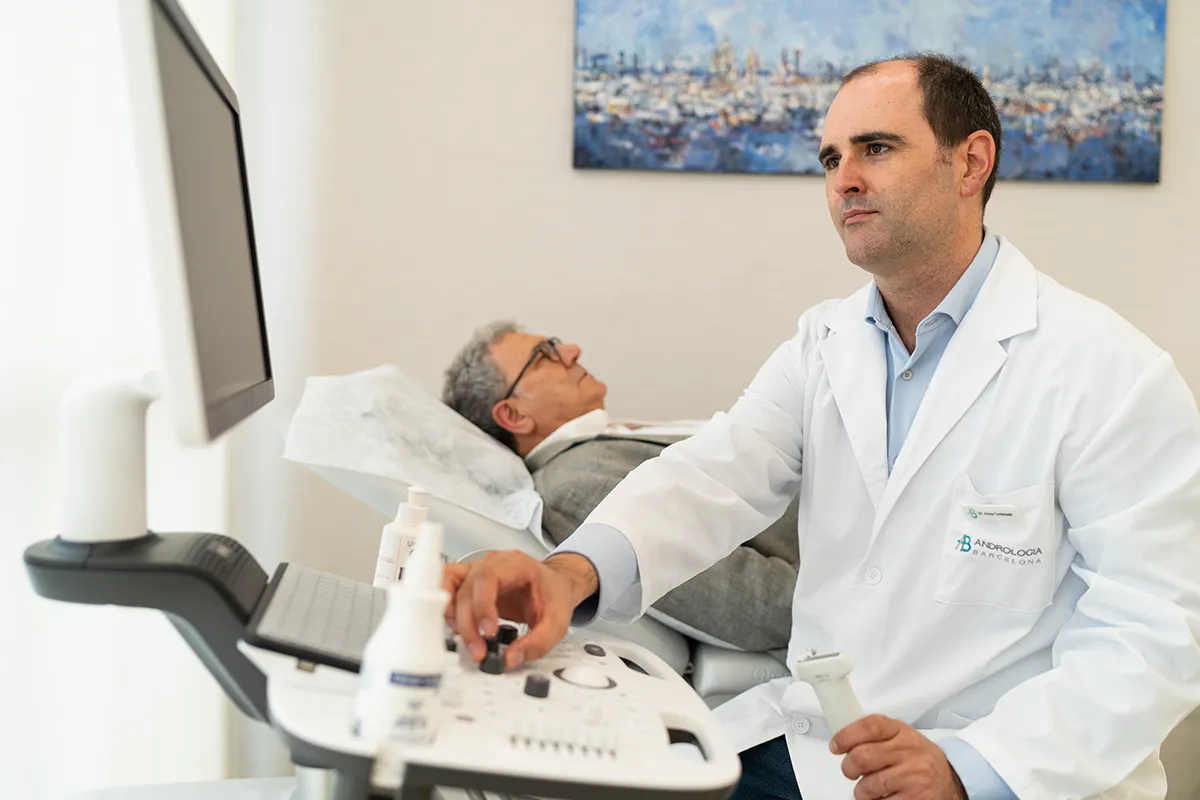
The first step in diagnosis is a complete medical history, assessing the patient’s symptoms, onset and progression, as well as medical history, lifestyle habits, and sexual function. This information allows us to guide hormonal testing and select the most appropriate studies to accurately confirm or rule out testosterone deficiency in a personalized way.
2
3
Hypogonadism and low sexual desire can be treated when properly diagnosed. In our Andrology unit in Valencia, we offer a discreet, personalized, and evidence-based medical approach.
Contact our team if you have symptoms or concerns about your hormonal health.